Sunitha Peter (Vice Principal, Ankur)
Inside Ankur’s NIOS Bridge Programme, what it takes to close a learning gap in one year
India’s foundational literacy gap is not a fringe problem. The ASER 2024 national survey found that 76.6% of Class III children in rural government schools still cannot read a Class II-level text, after three years of schooling. Reading levels have been recovering since the Covid pandemic, but even by Class 5, only 44.8% of children can read at Class 2 level. These are national averages; for children who are first in their family to attend school consistently, the starting gap is typically wider still.
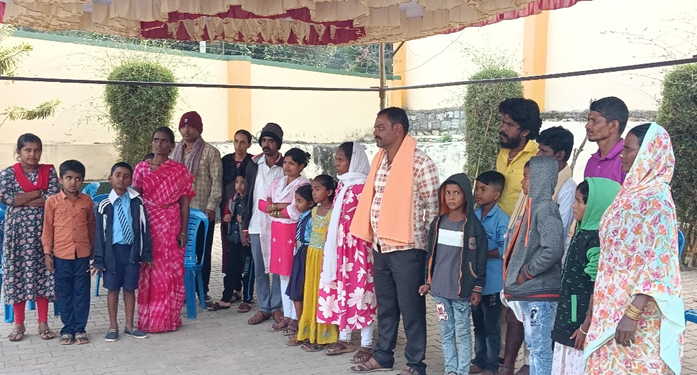
Ankur’s Bridge Programme is a working answer to one slice of that problem, tested at the level of individual children rather than policy. This year’s cohort is the fifth to go through the current model. What follows is what happens to with those first-generation learners and what the numbers show once they move into mainstream schooling.
| 13% → 54.6% Cohort subject average: Entry (After Gr 4) to first Unit Test (Gr 5) | 19 pts Academic gap vs. day scholars at Gr 6 entry | 60.3% Grade 6 PT1 class average, same cohort, CBSE mainstream | 6th Consecutive cohort through the current model |
A structural disadvantage, not a learning deficit
Children join Ankur after Grade 4, but their working academic level measured at entry is usually below grade levels. This year’s baseline assessment placed the cohort’s average score at 13% across subjects, and no child crossed 35%. In English specifically, average proficiency at entry was 9%, with every new student assessed below grade level.
The programme itself
The Bridge Programme runs as an intensive 9–10-week block from mid-April through June, before children formally enter the NIOS Open Basic Education (OBE-B) curriculum at Grade 5. It concentrates on foundational literacy, numeracy, and spoken English, delivered through a daily bilingual structure. That structure entails: a daily timetable running from morning yoga through to homework and circle time in the evening,
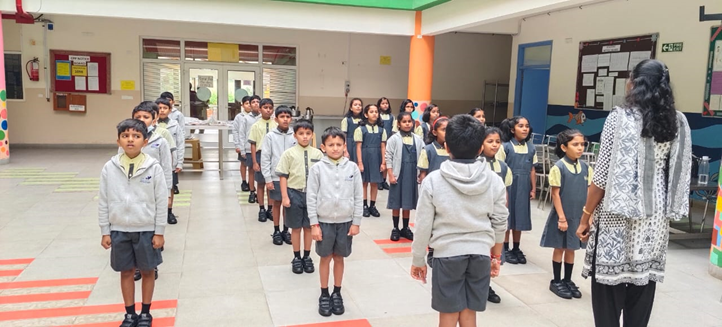
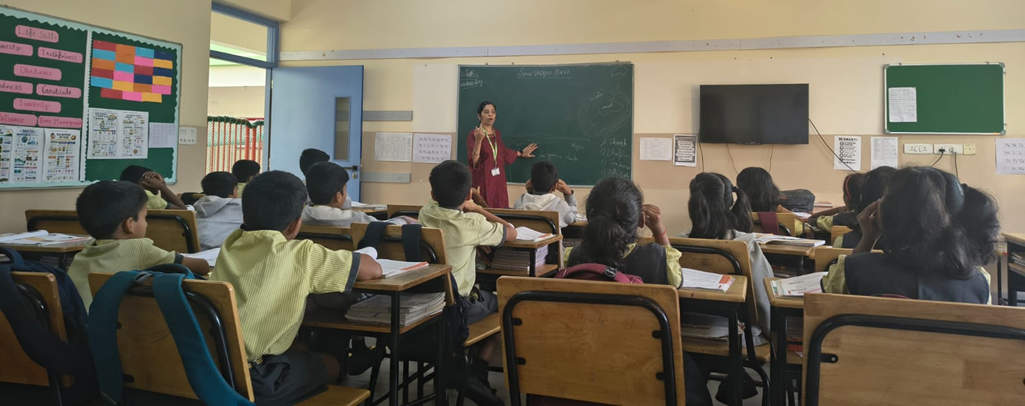
Once the NIOS academic year begins, it covers subjects such as English, mathematics, EVS, science, social science, Kannada, Hindi, computer science, general knowledge and Vocabulary. Vocabulary is taught as its own tracked subject rather than folded into English through the in-house Mindful Vocabulary Learning Method, new words, difficult words, and key words are worked through with spaced revision. Progress is checked continuously: chapter-wise tests, three Unit Tests through the year, a mock exam, and the NIOS Annual Exam, with results compiled and reviewed after each cycle so remedial sessions are planned before the next one begins.
What changes within the first year
This year (2026-27) by the first Unit Test of this NIOS Grade 5 cohort, the subject average across the group had moved from a 13% baseline to 54.6%, with individual subject averages ranging from 41% (EVS, Science) to 72.4% (Kannada). The spread within the cohort is wide: this term’s top scorer is above 90%, while some students remain in the 20–40% range. That range is expected: children enter with very different starting points, and some carry additional learning difficulties that require longer remediation cycles that continues for 1-2 years of extended Bridge.
What happens after NIOS Grade 5
Children who complete the NIOS Grade 5 year are streamlined into CBSE mainstream classes at The Samhita Academy from Grade 6 sharing classrooms with day scholars from the affluent backgrounds for the first time. At Grade 6 entry, the average academic gap behind day-scholar peers is around 19 percentage points. By this year’s Grade 6 PT1, the same cohort structure posted a class average of 60.3%.
From there, the same students go on to sit Grade 10 and 12 CBSE board exams. A good number have gone on to secure seats in tier-one/two colleges and into stable workplaces that let them support their families.
Why this matters as a process, not a single intervention
None of this happens through the Bridge Programme alone. It entails continuous baseline testing, a daily-tracked curriculum, an assessment cycle that feeds directly back into remedial teaching, and a deliberate transition plan into mainstream schooling refined over the years. Where individual children still lag, Ankur cohort by Grade 6, that gap is tracked and addressed by default, through the Individual Intervention Plan structure, continued as part of mainstream schooling and resolved at the point of transition.
The programme is, at its core, an operating process: diagnose, teach, test, compile, remediate, transition that sustains long enough, and consistently enough, that the gap a child arrives with stops being the gap they leave with. That process, more than any single classroom technique, is the part worth scaling.